



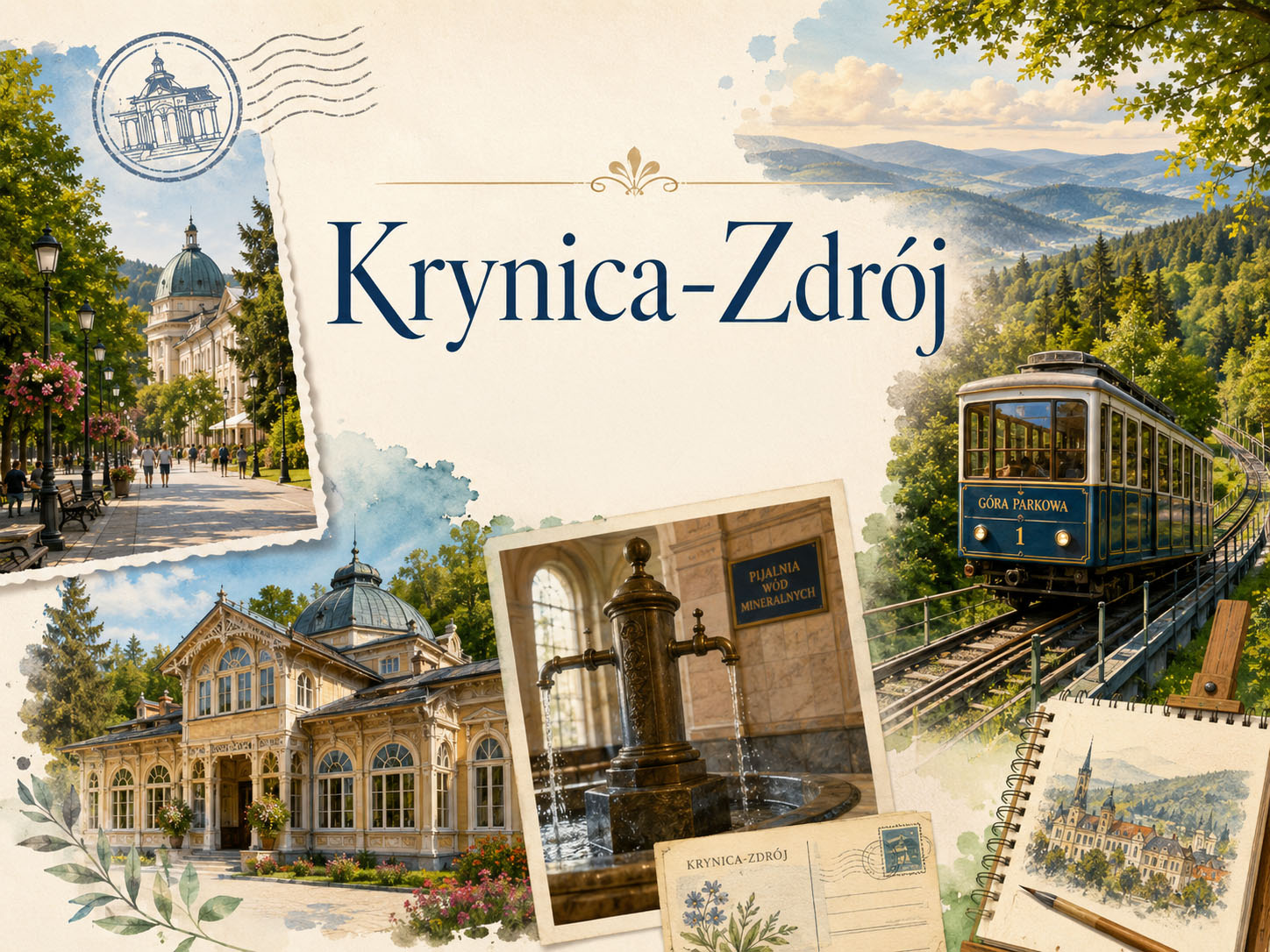
Krynica-Zdrój – a town of mineral waters, Nikifor and postcard-perfect views
Is there a place where you can ride a funicular dating back to the times of the Second Polish Republic, discover the traces of one of Poland’s most extraordinary painters, and just a few hours later find yourself high in the Beskid Mountains?
YES!
And that is exactly where we are taking you in the next entry in our travel-and-postcard series.
This time, our destination is Krynica-Zdrój – one of Poland’s best-known spa towns, located in the Beskid Sądecki Mountains. Krynica has something of an old-fashioned resort about it. Elegant villas, the promenade, mineral water pump rooms, historic spa houses and the mountains surrounding the town create an atmosphere that is difficult to find anywhere else. And on top of that, it is a place simply made to be admired on postcards.
The history of the town is much older than its sanatoriums and pump rooms. Krynica already existed before 1547, as confirmed by a privilege granting the local village headship to Danek from Miastko, today’s Tylicz. Its later development, however, became inseparably connected with something that remains the town’s greatest treasure to this day – its mineral waters.
In the 17th century, the healing properties of the local springs began to be recognised, but the true beginnings of the spa came later. In 1794, the so-called Mały Domek, or Little House, was built, and from 1804 it housed the first bathing facilities. Just three years later, in 1807, Krynica was officially recognised as a bathing spa, and that was when its history really began to gather pace.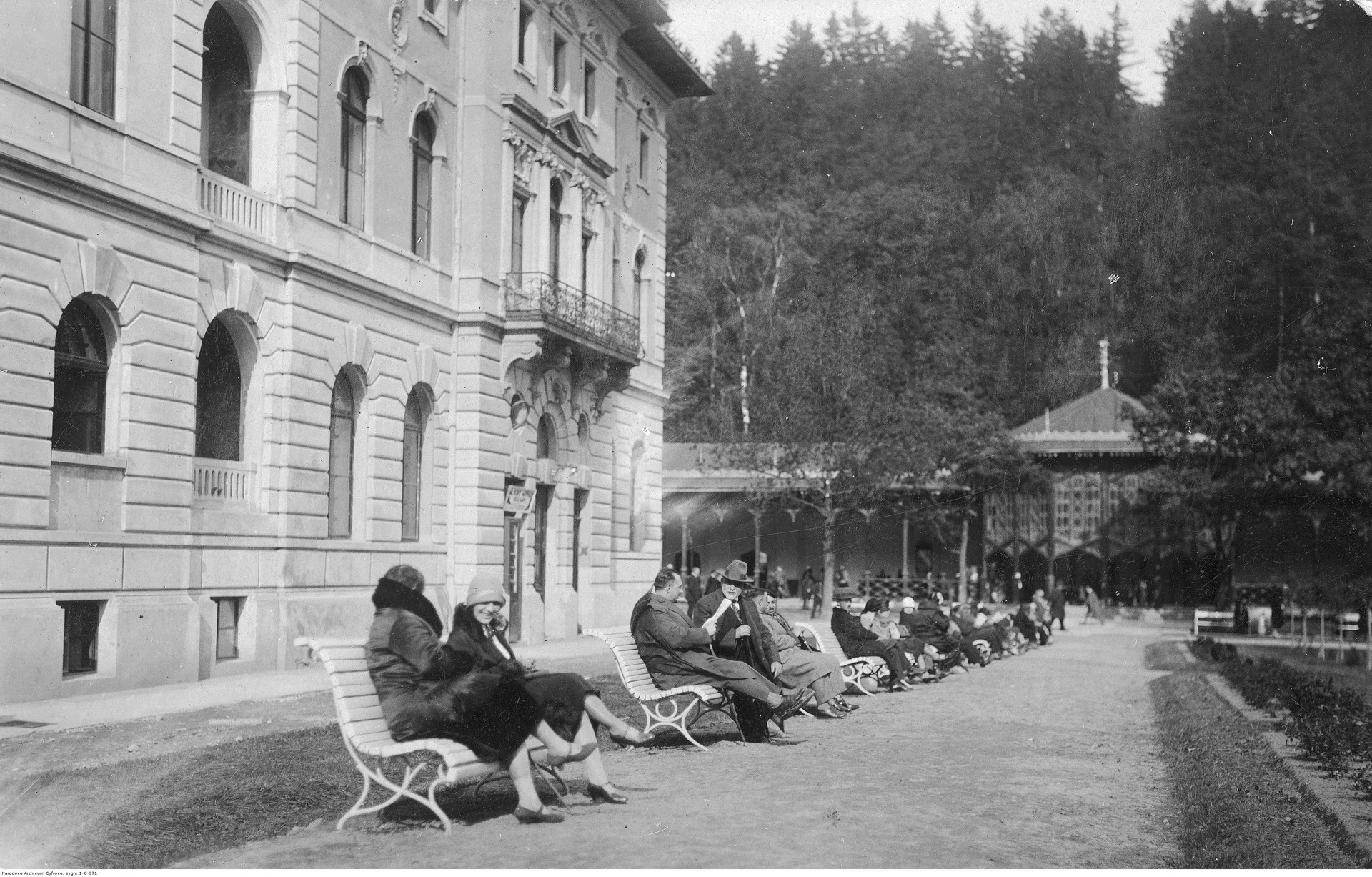
If, while walking around Krynica, you come across the name Józef Dietl, it is worth remembering. He is one of the most important figures in the history of Polish spa resorts. A professor at the Jagiellonian University and later Mayor of Kraków, he is regarded as the father of Polish balneology. His activities from 1856 onwards marked the beginning of Krynica’s great era as a spa resort. Mineral and peat baths, spa houses, guesthouses, the promenade, pump rooms and the infrastructure needed by the growing number of visitors were built. Krynica was becoming truly fashionable.
At the end of the 19th century, visitors included Jan Matejko, Artur Grottger, Henryk Sienkiewicz and Józef Ignacy Kraszewski. During the interwar period, the list of famous guests grew even longer – Władysław Reymont, Julian Tuwim, Konstanty Ildefons Gałczyński and Jan Kiepura were among those who came here. You could say that Krynica at that time was a little like today’s fashionable resort. Only instead of Instagram, there were...postcards.
Today, getting to Krynica does not seem particularly remarkable. More than a hundred years ago, things looked very different. In 1876, the railway reached Muszyna, while on 15 March 1911 the Muszyna–Krynica section was opened, making it much easier for visitors to reach the spa. That same year, Krynica was already visited by more than 11,000 people. By 1938, the number of spa visitors had reached around 40,000 per year. For pre-war times, that was an impressive figure.
What is worth seeing in Krynica-Zdrój?
The Promenade and Main Pump Room
If you are visiting Krynica for the first time, it is hard to imagine starting your sightseeing anywhere else. The promenade is the heart of the spa, and while walking along it you can admire the characteristic spa architecture and experience a little of the atmosphere of the old resort.
And since this is Krynica, there must of course be...mineral waters.
The local springs are one of the reasons why the town has attracted spa visitors for more than two centuries. And here is a small tip for anyone trying Zuber for the first time. Do not be fooled by the innocent appearance of the water. Its distinctive taste can be an experience in itself.
Góra Parkowa
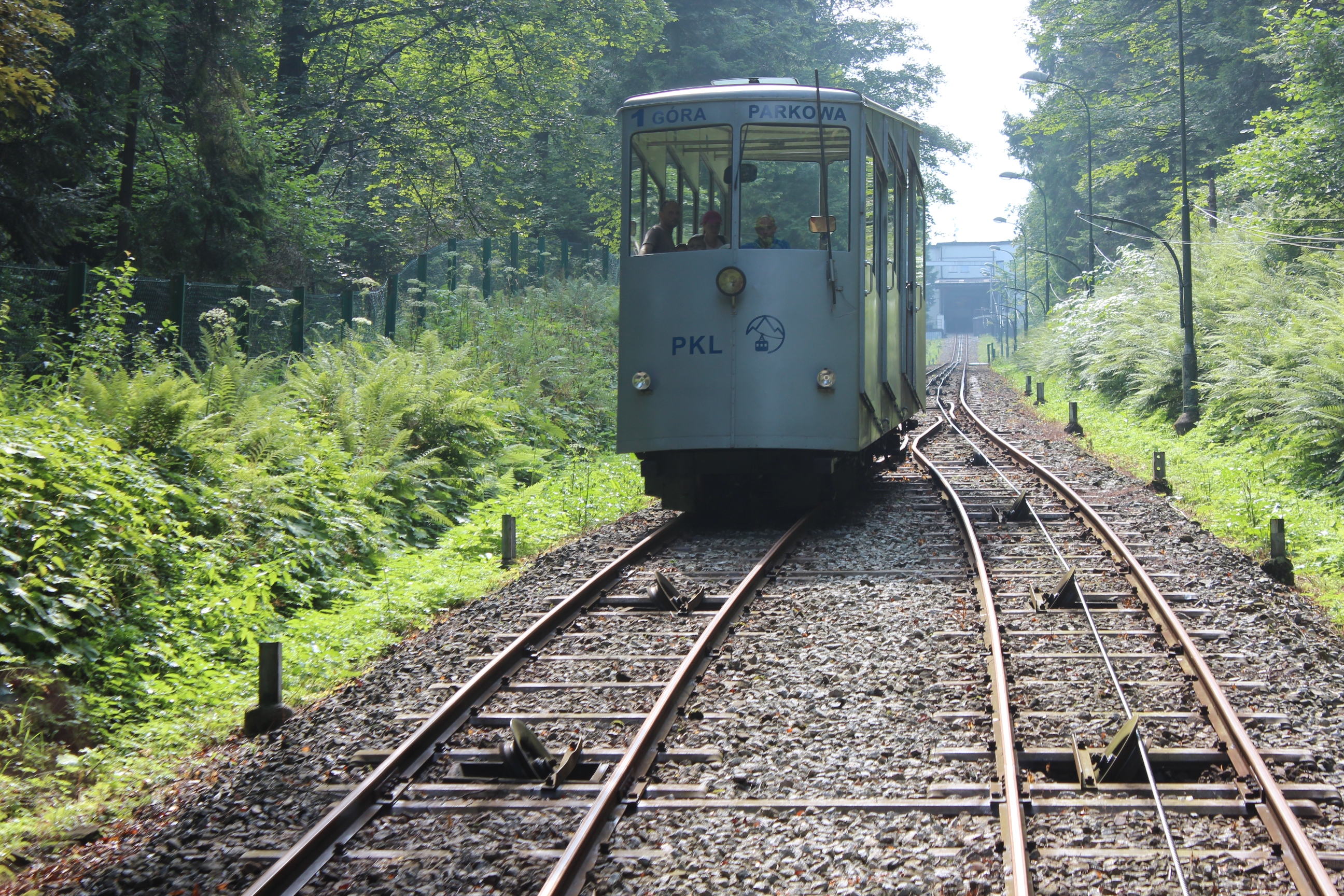
Góra Parkowa is one of Krynica’s symbols.
Attention! Here comes a real treat for lovers of the history of technology. A funicular railway leads to the top, and its history dates back to the interwar period – it was built during a time of intensive development of Krynica as both a resort and a winter sports centre. Today, Góra Parkowa has also gained a new attraction. In January 2026, a new observation tower was officially opened there, so anyone who remembers Krynica from a few years ago now has another reason to return.
Jaworzyna Krynicka
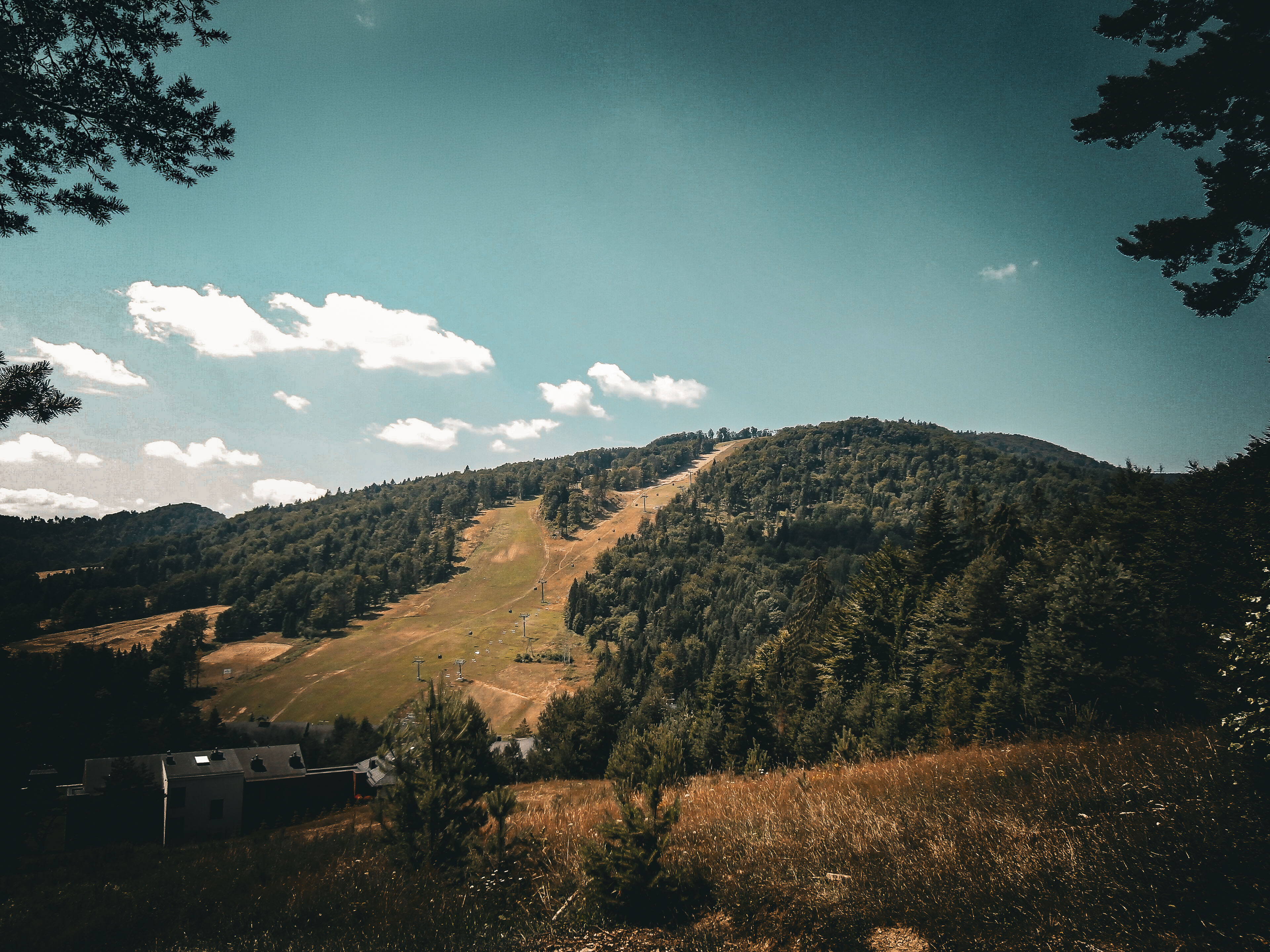
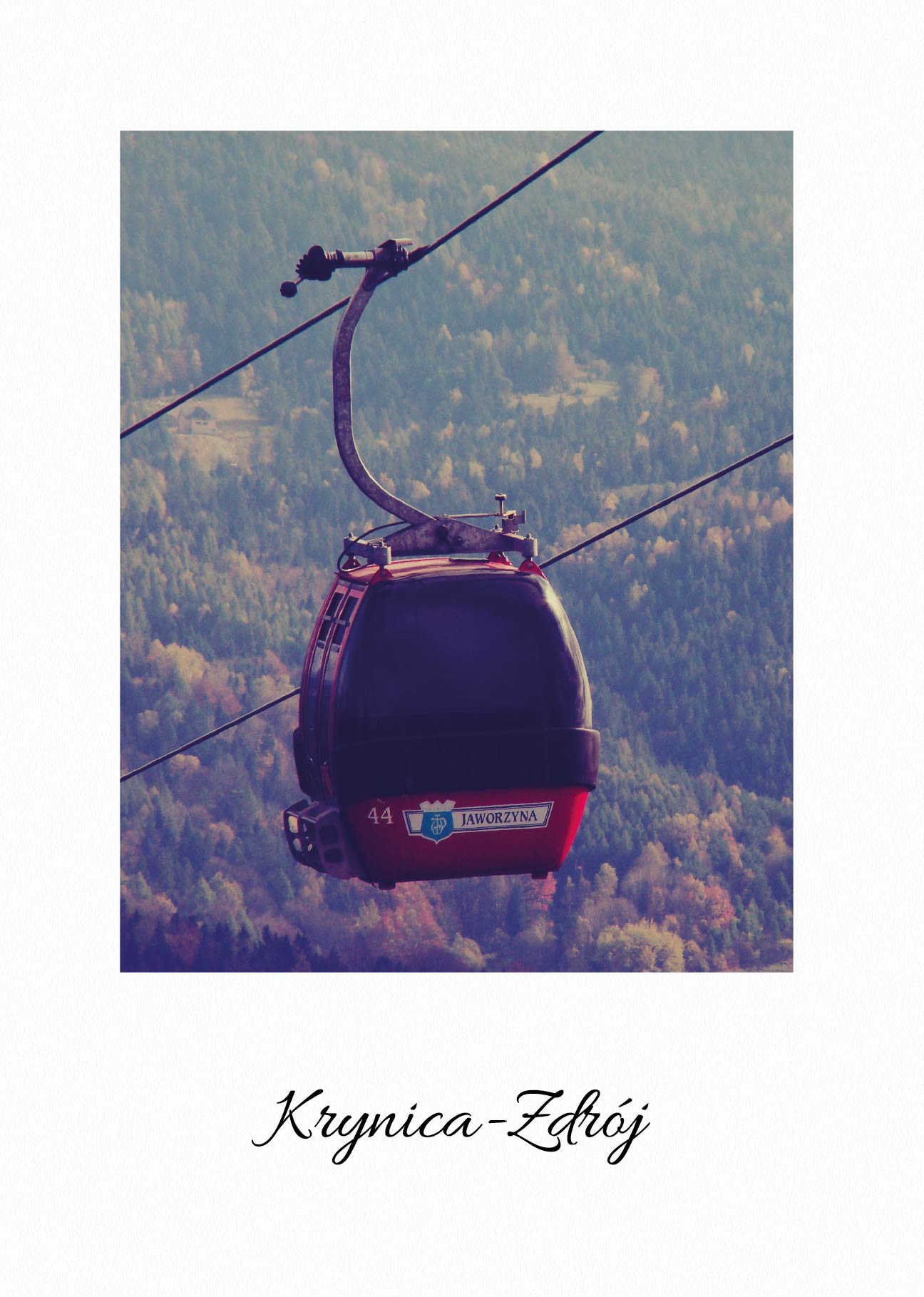
And now something for those for whom the promenade alone is definitely not enough. Jaworzyna Krynicka is one of the most recognisable peaks in the area. You can hike to the top or take the gondola lift. According to information provided by the town, the six-person gondolas cover a route of around 2 km in approximately seven minutes. In winter, Jaworzyna attracts skiers, while during the warmer months it draws hikers and everyone willing to leave Krynica’s promenade behind for a while in exchange for a beautiful view.
Nikifor Krynicki
This highly distinctive self-taught painter spent many years creating works depicting Orthodox churches, villas, buildings and landscapes. Today, his works can be found in museums and collections, although for much of his life the artist existed on the margins of society. Krynica is home to a museum dedicated to him, located in the historic Romanówka Villa. If you enjoy illustration, naïve art or simply extraordinary human stories, it is definitely worth visiting. Interestingly for collectors, the Nikifor Museum is also one of the places for which Polish Tourist Stamp No. 826 was created.
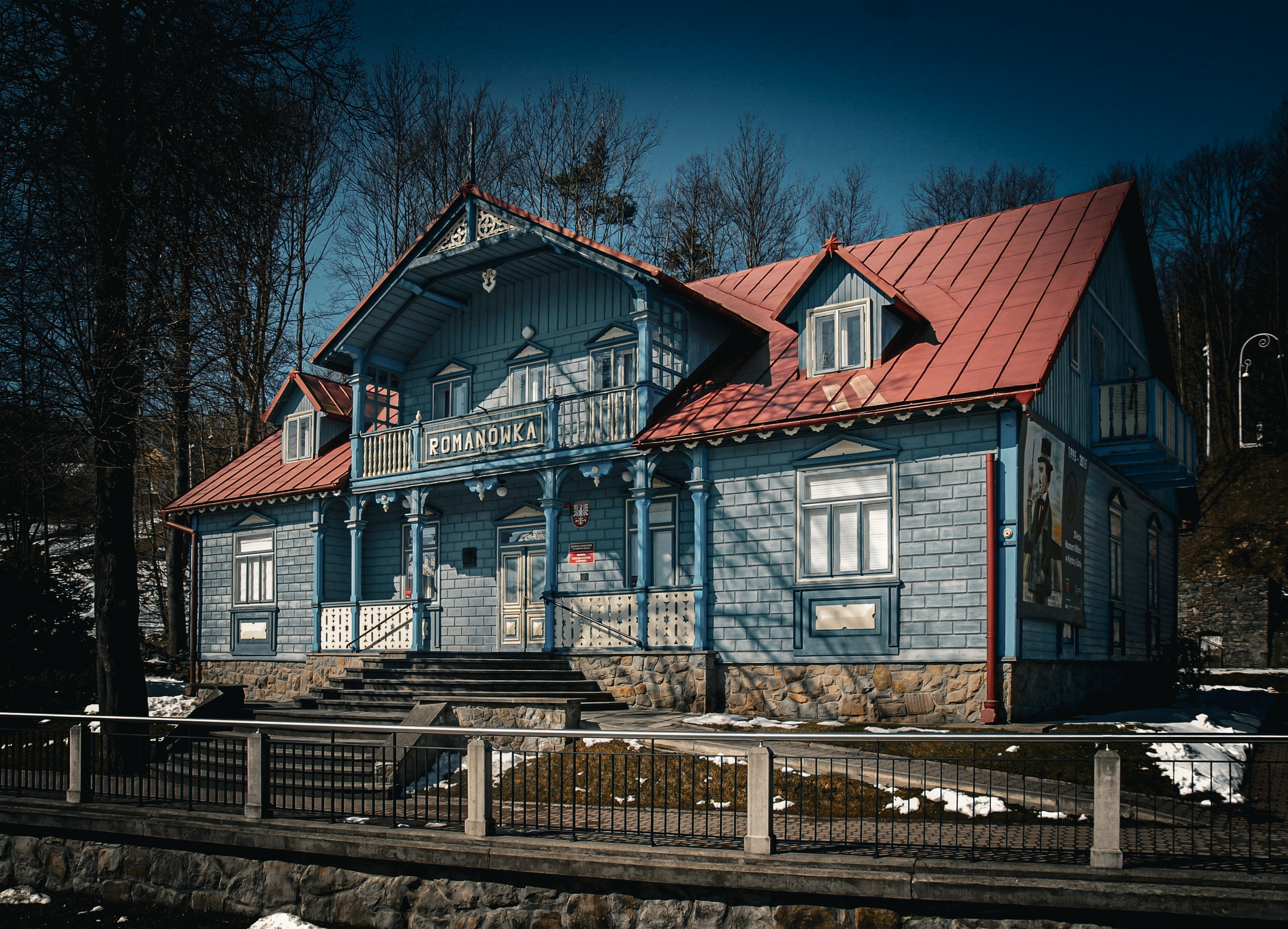
Jan Kiepura
The famous tenor regularly visited the resort, and his connection with Krynica is still commemorated today by a festival held in the town and bearing his name. Kiepura and his wife Marta Eggerth were also associated with the distinctive Patria Villa, which became one of the symbols of pre-war Krynica. Stories like these make it easier to understand why, during the interwar period, the town had a reputation as one of the most elegant resorts in Poland.
Interesting facts – things you may not have known about Krynica
- Zuber owes its name to a person. The spring was discovered during drilling carried out between 1912 and 1914 under the supervision of Rudolf Zuber, a professor at the University of Lviv, and was named after him.
- The railway greatly changed the popularity of the resort. The opening of a direct connection from Muszyna in 1911 made it significantly easier for spa visitors to arrive.
- Krynica once had a Wooden Theatre. Performers included Ludwik Solski and Helena Modrzejewska. Unfortunately, the building burned down in 1943.
- Krynica is not only a spa resort. During the interwar period, it also developed as a winter sports centre, hosting international luge and ice hockey competitions, among others.
- Nikifor is now one of the most recognisable artists associated with the town, although his life was far removed from that of a typical celebrated artist.
And what about the post office and postcards?
While preparing this entry, we came across various stories concerning Krynica’s old postal history. We were unable to confirm all of them in reliable sources. So rather than repeating attractive-sounding legends, we will leave them aside, because we have something much better.
Krynica has been photographed and immortalised on postcards for a very long time. Historic cards depicting the town have survived in the digital collections of the National Library of Poland. One of them, entitled “Krynica. General bird’s-eye view”, was published by the Kraków-based Polonia publishing house and is broadly dated to the years 1927–1947. It is a fantastic opportunity for comparison: Krynica then ↔ Krynica today. Old postcards show not only buildings, but also fashion, architecture, ways of spending leisure time and, above all, how people wanted to present the spa to those who had never seen it before. After all, several decades or a hundred years ago, a postcard served somewhat the same purpose as today’s holiday social media post.
There is only one difference. Instead of:
“Krynica-Zdrój #weekend”
there was:
“Warm greetings from Krynica”.
And of course, we have reached our favourite part. Because how can you visit one of Poland’s most famous spa towns and not send a postcard from there?
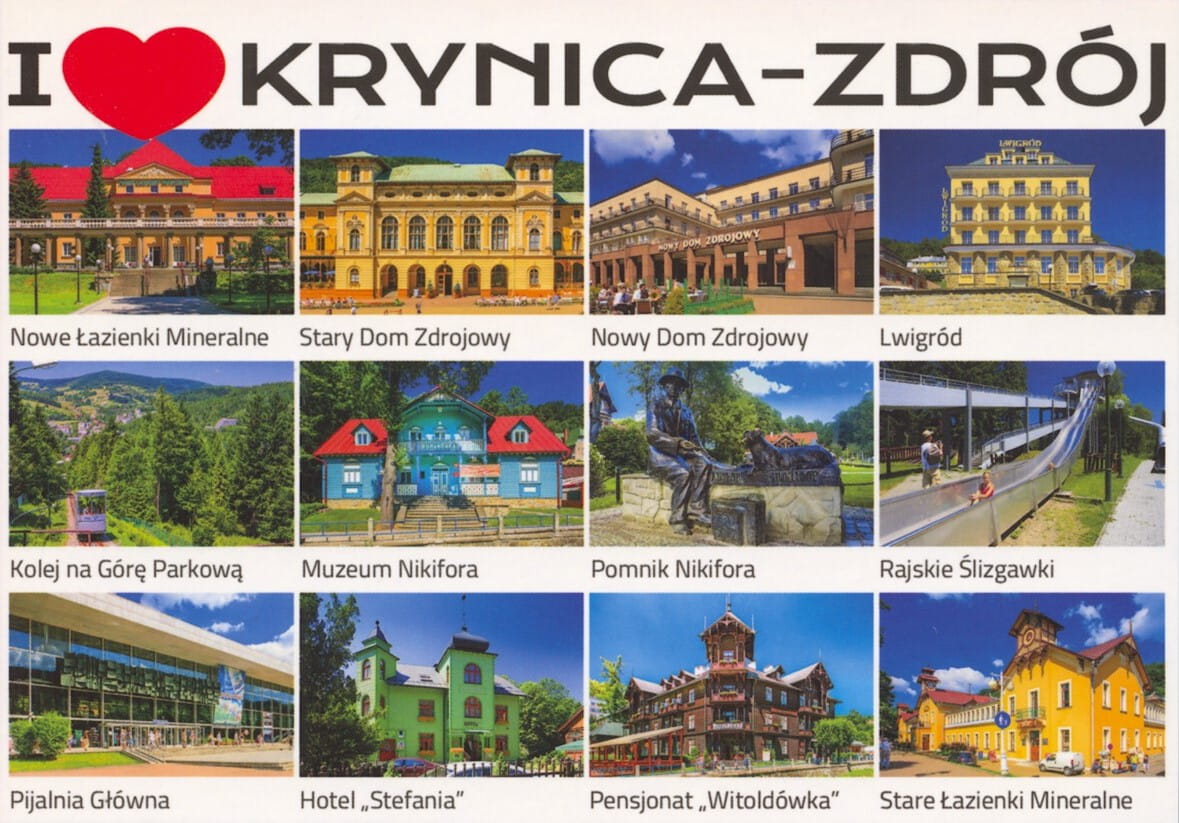
Krynica is exactly the kind of place that offers enormous possibilities for designers and photographers.
- The promenade.
- Pump rooms.
- Góra Parkowa.
- Jaworzyna Krynicka.
- Historic villas.
- Nikifor.
- Winter landscapes.
- Mountain panoramas.
Each of these motifs can tell a completely different story about the town.
Krynica – is it worth visiting?
In our opinion, definitely.
You can come for the mineral waters, the mountains, Nikifor, pre-war architecture or skiing. Or simply to stroll along the promenade, buy a few postcards and, for a moment, experience the atmosphere of an old spa resort.
Krynica-Zdrój is a little like an old postcard – it has its own history, character and something that simply cannot be perfectly recreated on a screen. You have to see it with your own eyes.
And afterwards...send someone your greetings.
And very soon, another stop on our travel-and-postcard journey.
Source: House of Postcards Archive, Creative Commons and NAC