



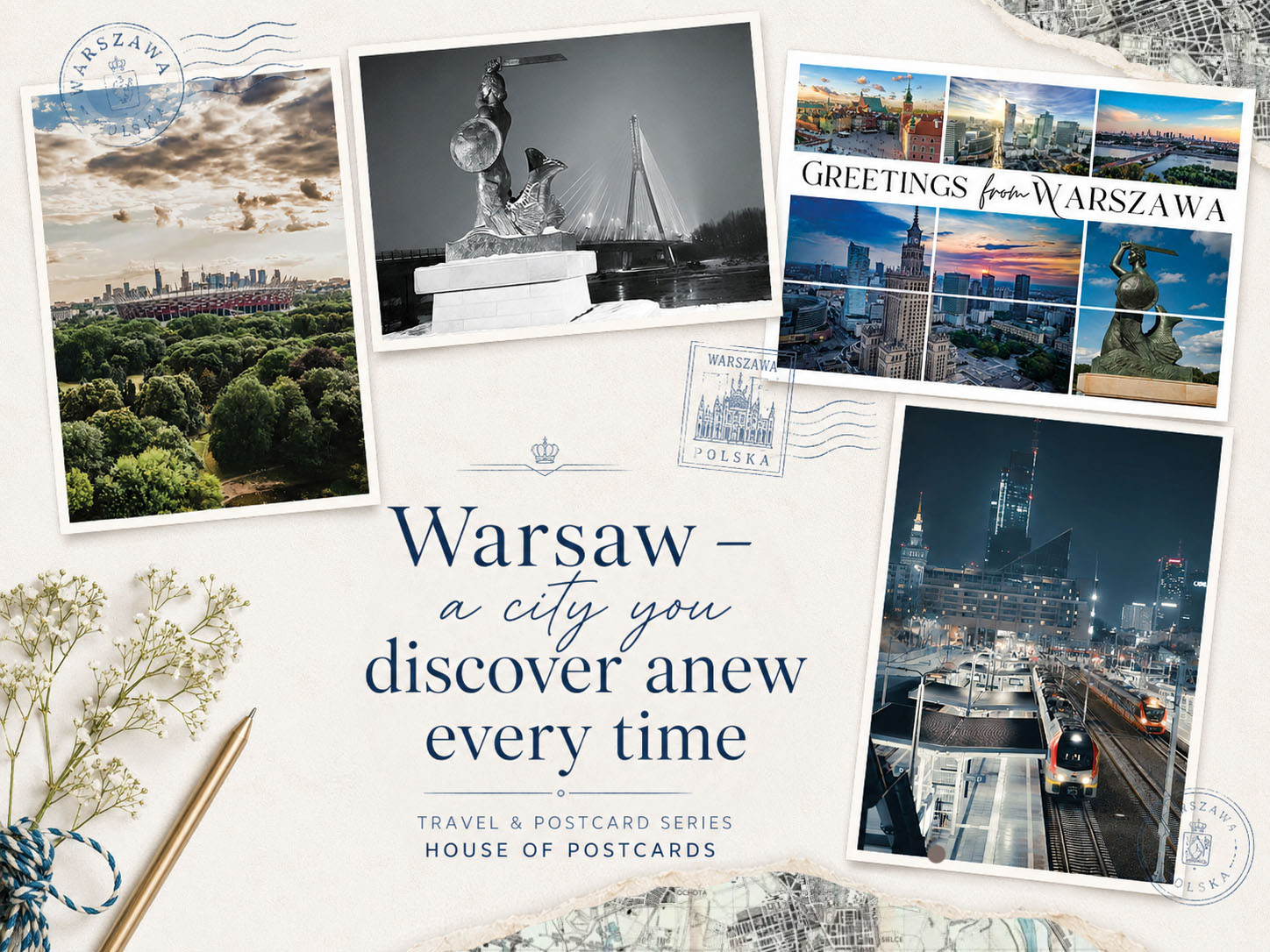
Warsaw – a city you discover anew every time
There are cities you visit once, and there are those you want to return to.
Warsaw definitely belongs to the latter group. The capital of Poland delights visitors with its extraordinary combination of history and modernity. On the one hand, there are the historic streets of the Old Town, royal residences and memorial sites; on the other – glass skyscrapers, lively boulevards along the Vistula River and modern museums.
It is a perfect destination for both a weekend city break and a longer stay filled with discovery.
The history of Warsaw dates back to the 13th century, when a small settlement began to develop on a high escarpment overlooking the Vistula River. Over the following centuries, the city grew in importance as a centre of trade, administration and politics.
In 1596, King Sigismund III Vasa moved his royal court to Warsaw, and the city gradually became the most important one in the Polish–Lithuanian Commonwealth.
However, fate was not always kind to it. During the Second World War, Warsaw was almost completely destroyed. Following the Warsaw Uprising in 1944, more than 85% of its historic centre lay in ruins.
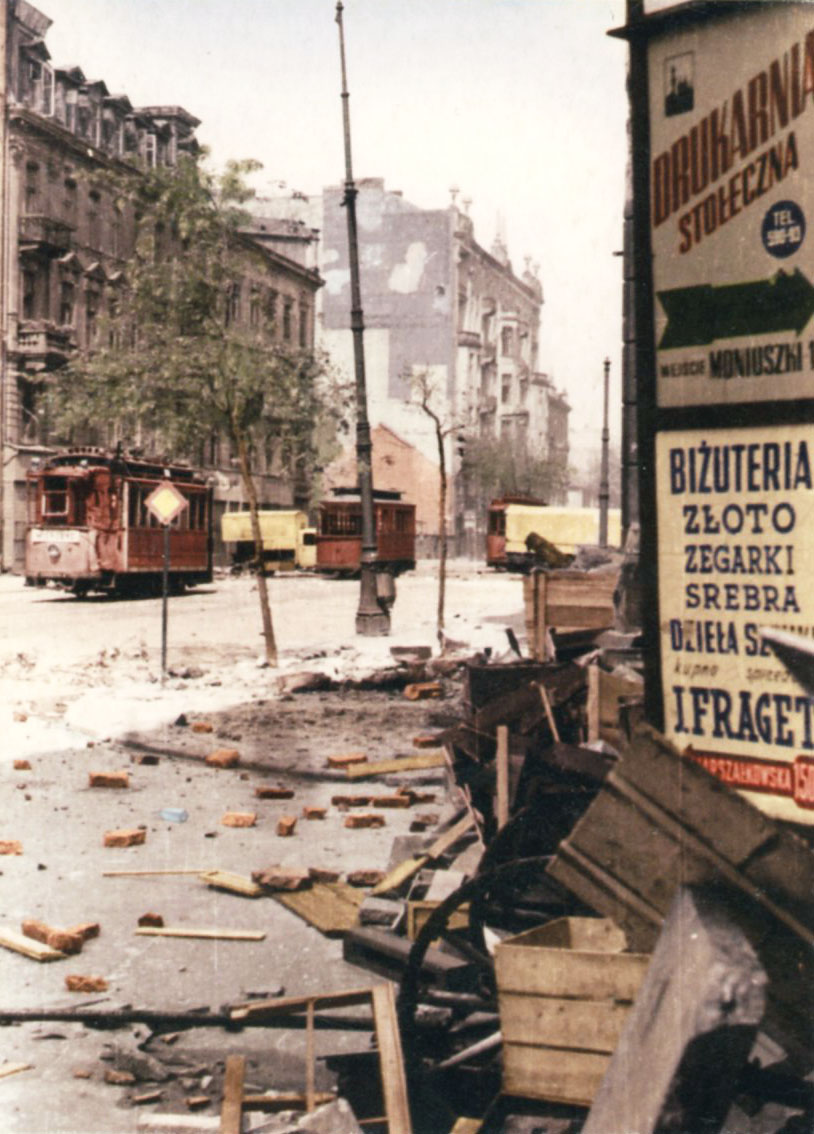
Source: House of Postcards Archive
Thanks to the enormous efforts of residents, architects, historians and conservation experts, the Old Town was meticulously reconstructed.
In 1980, Warsaw’s historic centre was inscribed on the UNESCO World Heritage List as an exceptional example of the almost complete reconstruction of a historic part of a city.
Where did the name Warsaw come from?
The exact origin of the capital’s name has never been conclusively explained, but the legend of Wars and Sawa has been told for generations.
One of its best-known versions tells the story of a fisherman named Wars and his wife, Sawa, who lived in a small cottage by the Vistula River. One day, they welcomed a prince who had become lost during a hunt into their home. They fed him, warmed him and allowed him to rest, unaware of who their guest really was. Grateful for their kindness, the prince is said to have named the surrounding lands Warszowe, so that the memory of the hospitable couple would never be forgotten. Over time, a settlement grew around the fisherman’s cottage, and its name – according to the legend – evolved into Warszawa.
The story of Wars and Sawa is one of Warsaw’s most beautiful legends, although it is not a scientifically confirmed explanation of the city’s name. However, it reminds us of the important place occupied in Warsaw’s tradition by the Vistula River, hospitality and ordinary residents who helped build the history of the capital.
Today, Warsaw is the largest city in Poland and one of Europe’s most important centres of business, science and culture. It is a place filled with museums, parks, cafés, restaurants and events. While exploring the city, you can spend one day learning about Polish history and the next admiring modern architecture, visiting art galleries or relaxing on a beach beside the Vistula River.
However, Warsaw has another side – one filled with mysteries, extraordinary creatures and stories passed down from generation to generation. It was here that the Mermaid, the Basilisk and the princess enchanted into the Golden Duck were said to have lived.
The Old Town
This is the best place to begin exploring Warsaw. Colourful townhouses, the Old Town Market Square, narrow streets and an extraordinary atmosphere make it easy to understand why it is included on the UNESCO World Heritage List.
It is the perfect place to begin a journey in the footsteps of Warsaw’s legends.
The Warsaw Mermaid – guardian of the city
In the centre of the Old Town Market Square stands the monument to the Warsaw Mermaid – one of the capital’s most important symbols. According to legend, the Mermaid travelled along the Vistula River from the Baltic Sea and stopped on the riverbank near today’s Old Town. Delighted by the area, she decided to make it her home. Her beautiful singing enchanted the local fishermen. One day, a greedy merchant captured the Mermaid, intending to display her at fairs and make money from her extraordinary voice. She was freed by a young fisherman and his friends. Grateful, the Mermaid promised that from then on she would defend the residents and their town. This is why she is depicted with a sword and shield, and why her image appears on Warsaw’s coat of arms. To this day, mermaids can be found in many places throughout the capital – on monuments, building façades, street lamps, signs and decorations.
The Basilisk of Krzywe Koło Street
Krzywe Koło Street is located near the Old Town Market Square. According to legend, the Basilisk lived in the cellar of one of its townhouses. It was described as a terrifying monster with a body covered in scales, wings resembling those of a bat and sharp claws. Its gaze, however, was the most dangerous of all – anyone who looked directly into its eyes was turned to stone. Many brave people tried to defeat the beast, but none of them returned. Finally, a clever tailor came up with the idea of entering the underground chambers carrying a large mirror. The Basilisk saw its own reflection and was turned to stone. When the monster was defeated, its former victims regained their human form, and the residents of Warsaw could finally breathe a sigh of relief. Several versions of this legend exist, but in all of them the Basilisk is defeated in the same way – by its own deadly gaze.
The Royal Castle and Sigismund’s Column
Castle Square is one of the most recognisable places in Poland. It is home to the Royal Castle, which served for centuries as the residence of Polish monarchs and the setting for important political and state events. Right beside it stands Sigismund III Vasa’s Column – one of Warsaw’s most important symbols and a popular meeting place for the capital’s residents.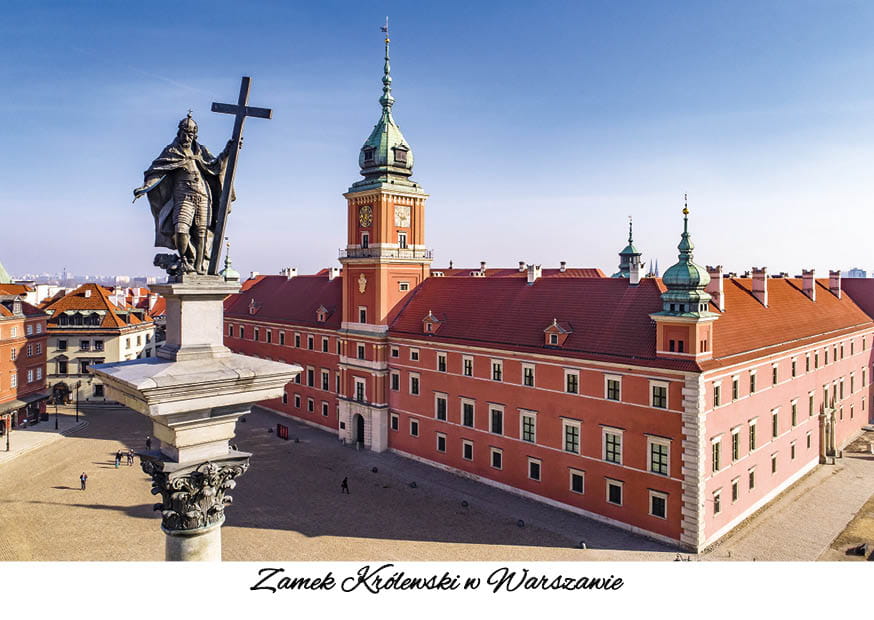
Source: Postcard published by House of Postcards
The Royal Route
Those who enjoy long walks should definitely explore the Royal Route. It is one of the most beautiful walking routes in Warsaw. Along the way, you will pass historic churches, palaces, the University of Warsaw and numerous cafés. The route leads through Krakowskie Przedmieście and Nowy Świat, among other places, before continuing towards the Royal Łazienki Park and Wilanów Palace.
Ostrogski Castle and the legend of the Golden Duck
Ostrogski Castle stands on Tamka Street and is now home to the Fryderyk Chopin Museum. Its underground chambers are associated with one of Warsaw’s best-known legends – the story of the Golden Duck.
According to legend, a princess enchanted into a golden duck lived in the castle’s dungeons. She could grant someone enormous wealth, but only under a difficult condition. One day, a poor shoemaker named Lutek reached the underground chambers. The Golden Duck gave him a purse filled with ducats and ordered him to spend all the money within a single day exclusively on himself. He was not allowed to share it with anyone else. Lutek bought expensive clothes, ate in taverns, travelled around the city and visited the theatre. Even so, he was unable to spend the entire amount. In the evening, he met a poor war veteran who had not eaten for several days. The shoemaker could not ignore his suffering and gave him a handful of golden ducats. At that very moment, the spell was broken. Lutek lost everything he had purchased and once again became a poor shoemaker. However, he did not regret his decision. He understood that money spent solely on personal pleasures could not bring true happiness.
This version of the legend has a beautiful ending. Thanks to his honest work and kind heart, Lutek became a respected master craftsman, started a family and lived happily for many years. He did not need the Golden Duck’s treasure to change his fate.
The Royal Łazienki Park
This is the green heart of Warsaw. While walking along its paths, visitors can admire the Palace on the Isle, a historic amphitheatre, peacocks strolling through the park and the famous monument to Fryderyk Chopin. During the summer, free Chopin concerts are held here, attracting residents and tourists from all over the world for many years.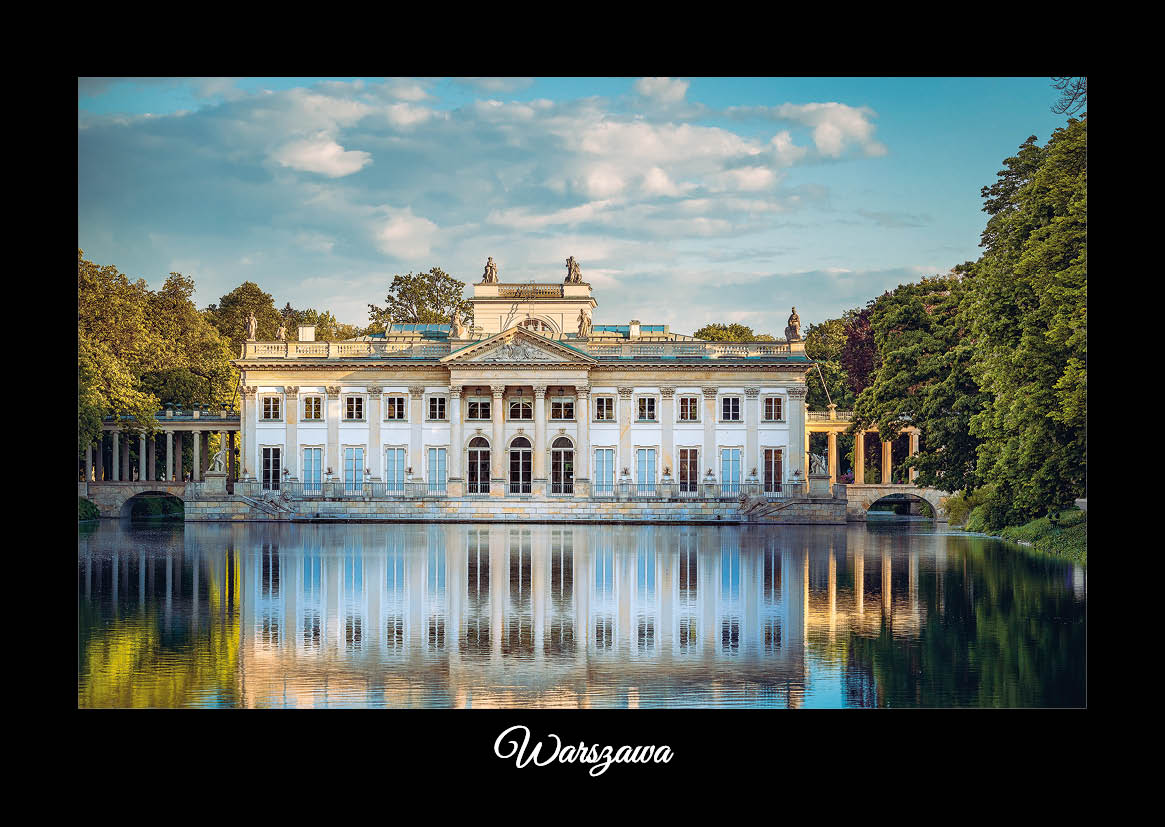
Source: Postcard published by House of Postcards
The Palace of Culture and Science
Some people love it, while others consider it the most controversial building in Poland. One thing is certain – it is difficult to imagine Warsaw’s skyline without the Palace of Culture and Science. An observation deck is located on the 30th floor, offering an extensive panorama of the city and a view of how historic buildings blend with modern skyscrapers.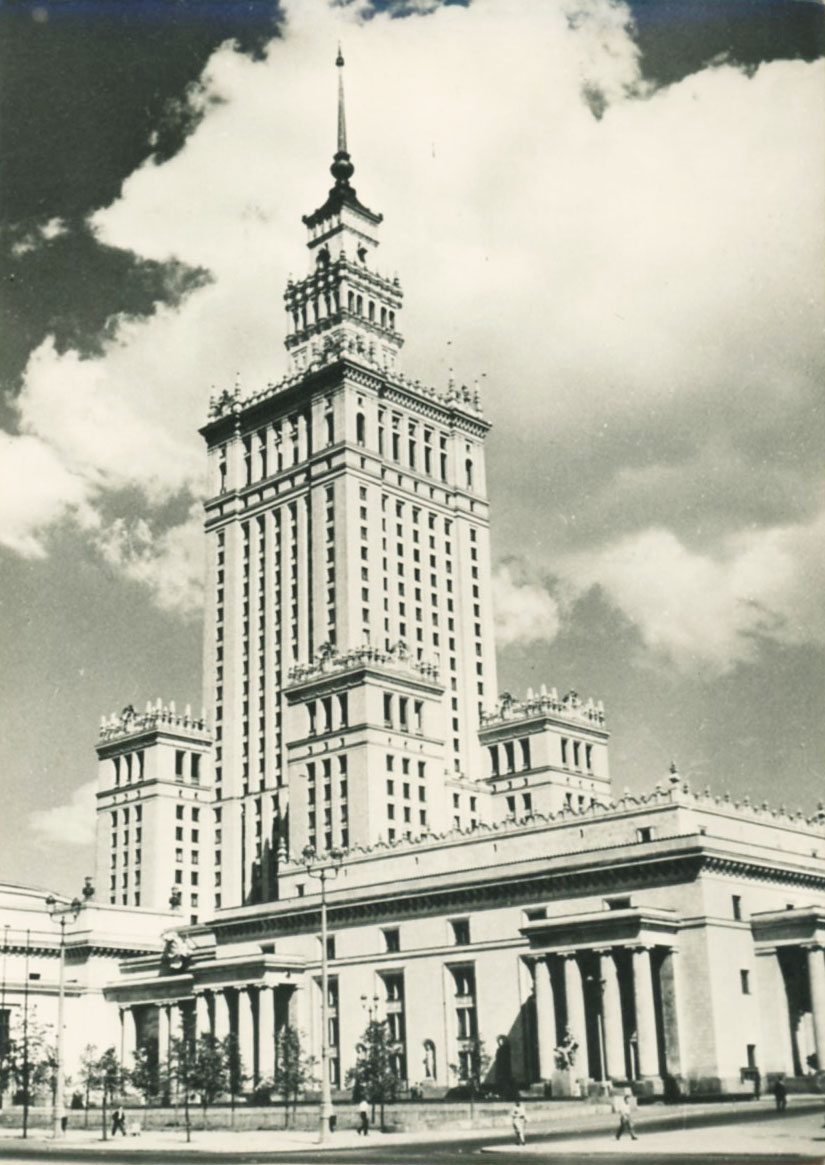
Source: House of Postcards Archive
The Vistula Boulevards
Only a dozen or so years ago, few people considered the Vistula River a place for relaxation and walks. Today, the Vistula Boulevards are among the most frequently visited parts of the city. During the summer, visitors can relax beside the river, take a cruise, ride a bicycle or simply sit on the steps and admire the sunset.
The Warsaw Rising Museum
This is one of Warsaw’s most important historical museums. In an exceptionally moving way, it tells the story of the events of 1944, the everyday lives of the insurgents and the experiences of the residents of the fighting city. It is a place that helps visitors understand Warsaw’s history more deeply and remains in their memory for a very long time.
Interesting facts
Did you know that…
- The Warsaw Mermaid has been a symbol of the city for several hundred years and appears on its coat of arms?
- According to legend, the Mermaid travelled to Warsaw along the Vistula River and promised to protect its residents?
- The Basilisk was said to have lived in the cellar of one of the townhouses on Krzywe Koło Street?
- The Golden Duck gave the shoemaker Lutosław a purse of ducats, but it was honest work and a kind heart that ultimately brought him true happiness?
- The legend of Wars and Sawa exists in several different versions?
- The Old Town was inscribed on the UNESCO World Heritage List not because of the age of all the buildings visible today, but as an exceptional example of faithful reconstruction following wartime destruction?
- Free piano concerts are held beside the Fryderyk Chopin monument in the Royal Łazienki Park every Sunday during the summer?
Warsaw’s mermaids can be found not only in the Old Town Market Square, but also on buildings, street lamps, signs and viaducts?
When visiting the capital, make sure to leave some room in your suitcase for… postcards.
For many years, Warsaw has been one of the most popular Polish themes among Postcrossers. It is hardly surprising – the colourful townhouses of the Old Town, the Royal Castle, the Mermaid, the Palace of Culture and Science and the city skyline all look wonderful on postcards.
At House of Postcards, you will find a wide selection of postcards featuring Warsaw from various publishers, including:
Wydawnictwo Kamera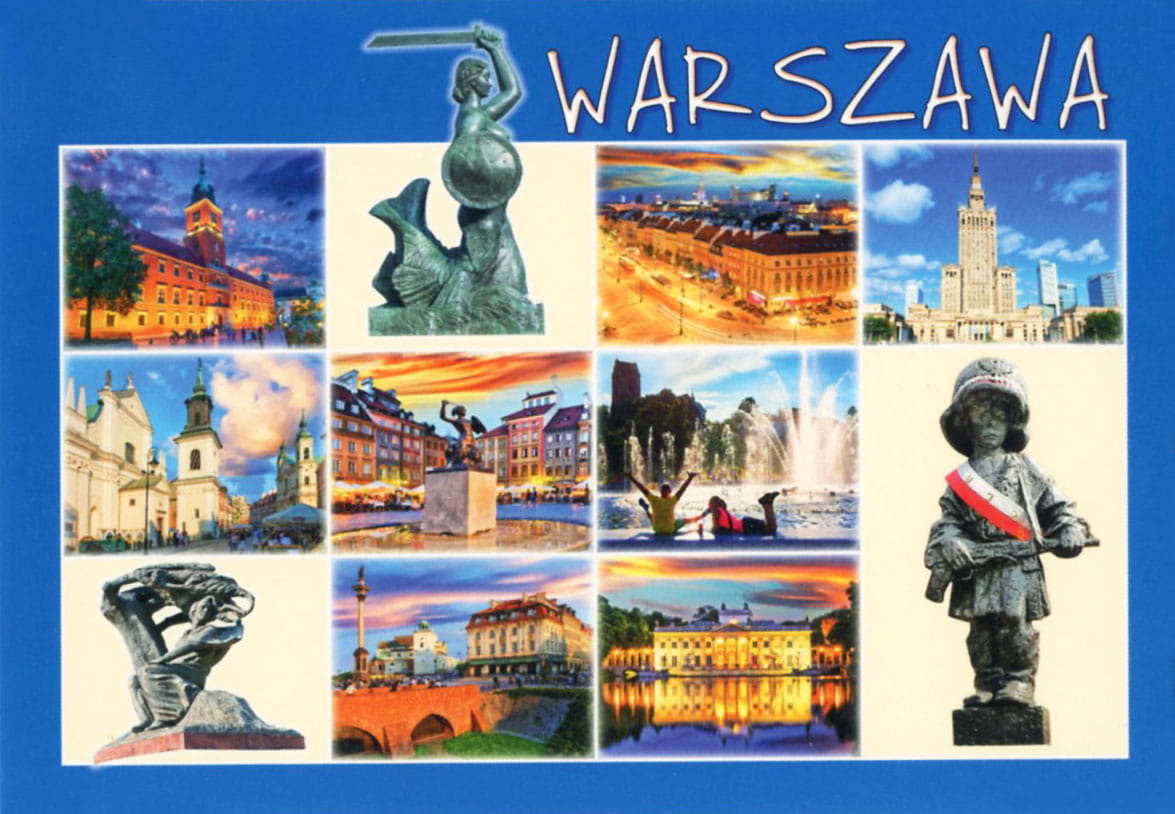
DDK Edition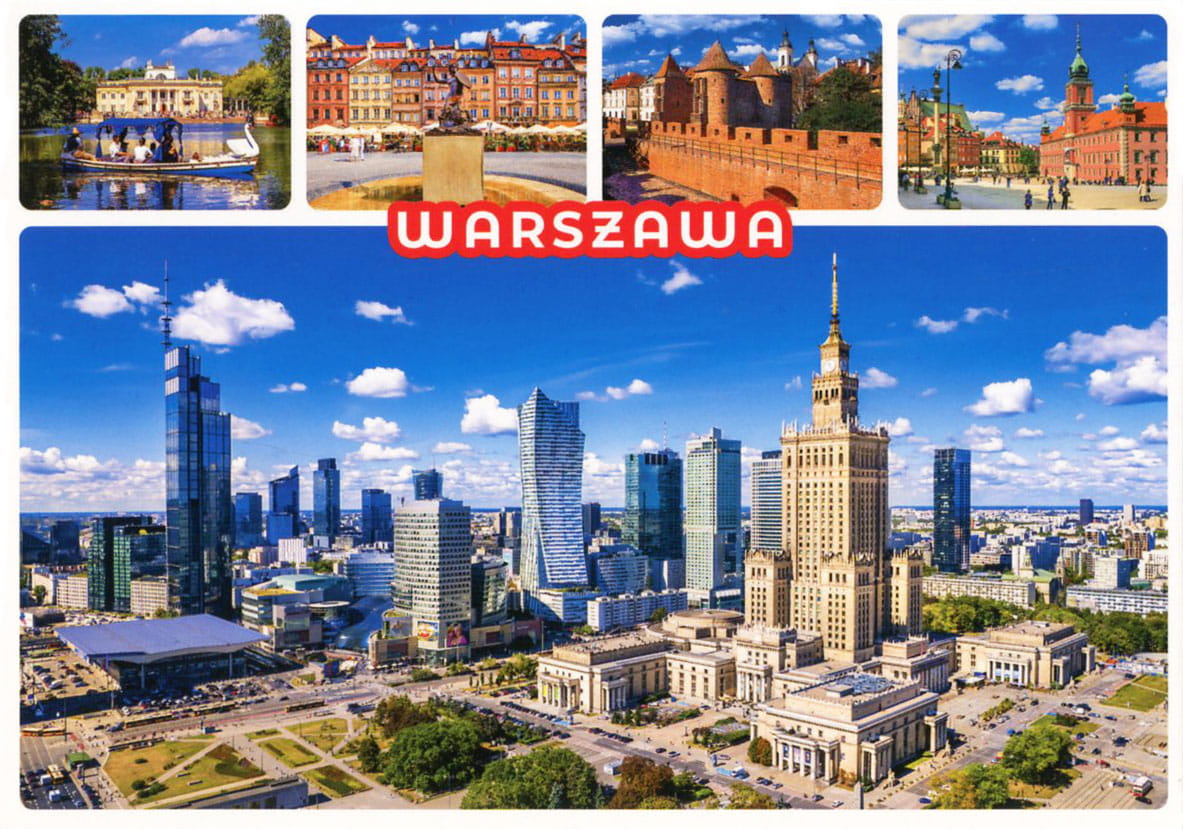
House of Postcards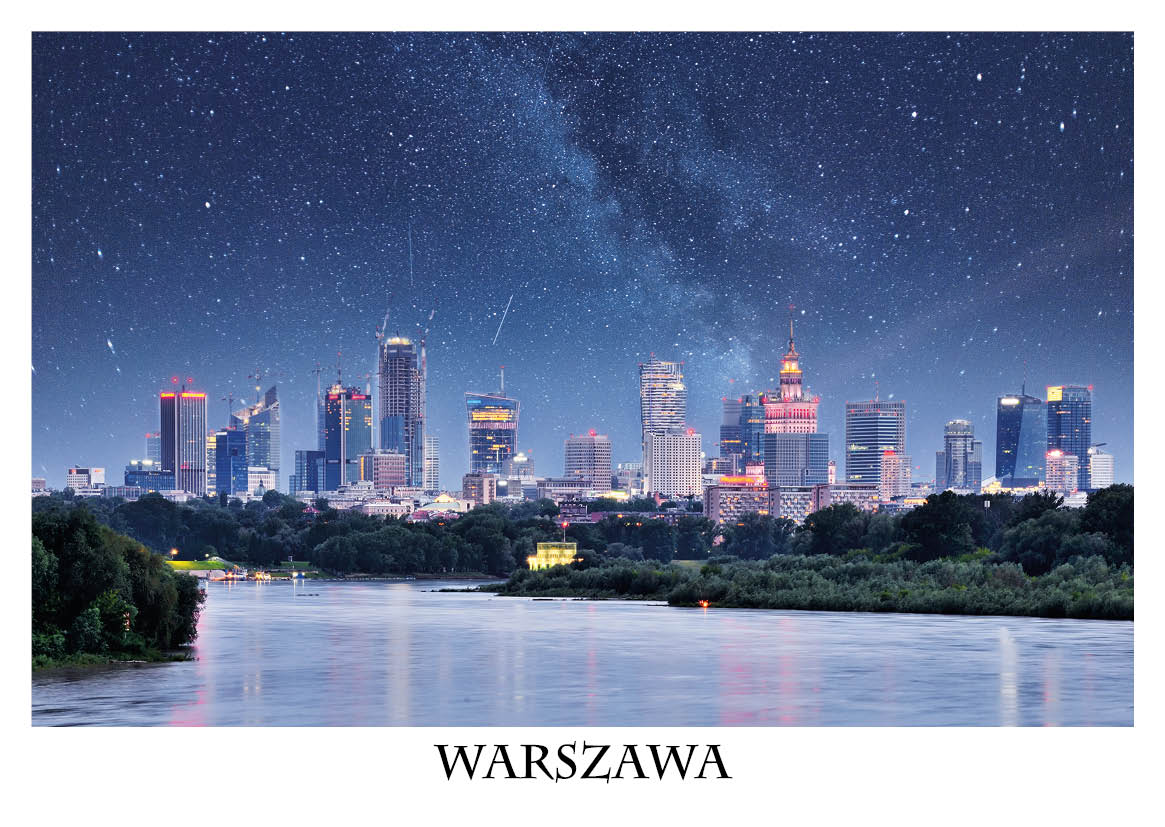
They feature both the capital’s most recognisable landmarks and modern skylines, atmospheric streets and the Warsaw Mermaid. Warsaw can surprise you every time. Some people fall in love with the charming streets of the Old Town, others with the modern city centre, and still others with its green parks, walks along the Vistula River and extraordinary stories hidden among historic townhouses. It is a city best discovered slowly – step by step, story by story and legend by legend. Perhaps you will also manage to find traces of the Warsaw Mermaid, the Basilisk or the Golden Duck?
Another article in our travel and postcard series is coming soon!